Robotic Spine Surgery .
Robotic spine surgery uses advanced robotic technology to assist with precise planning and execution of spine procedures. Robotic guidance improves screw placement accuracy, reduces radiation exposure, and supports complex deformity correction.
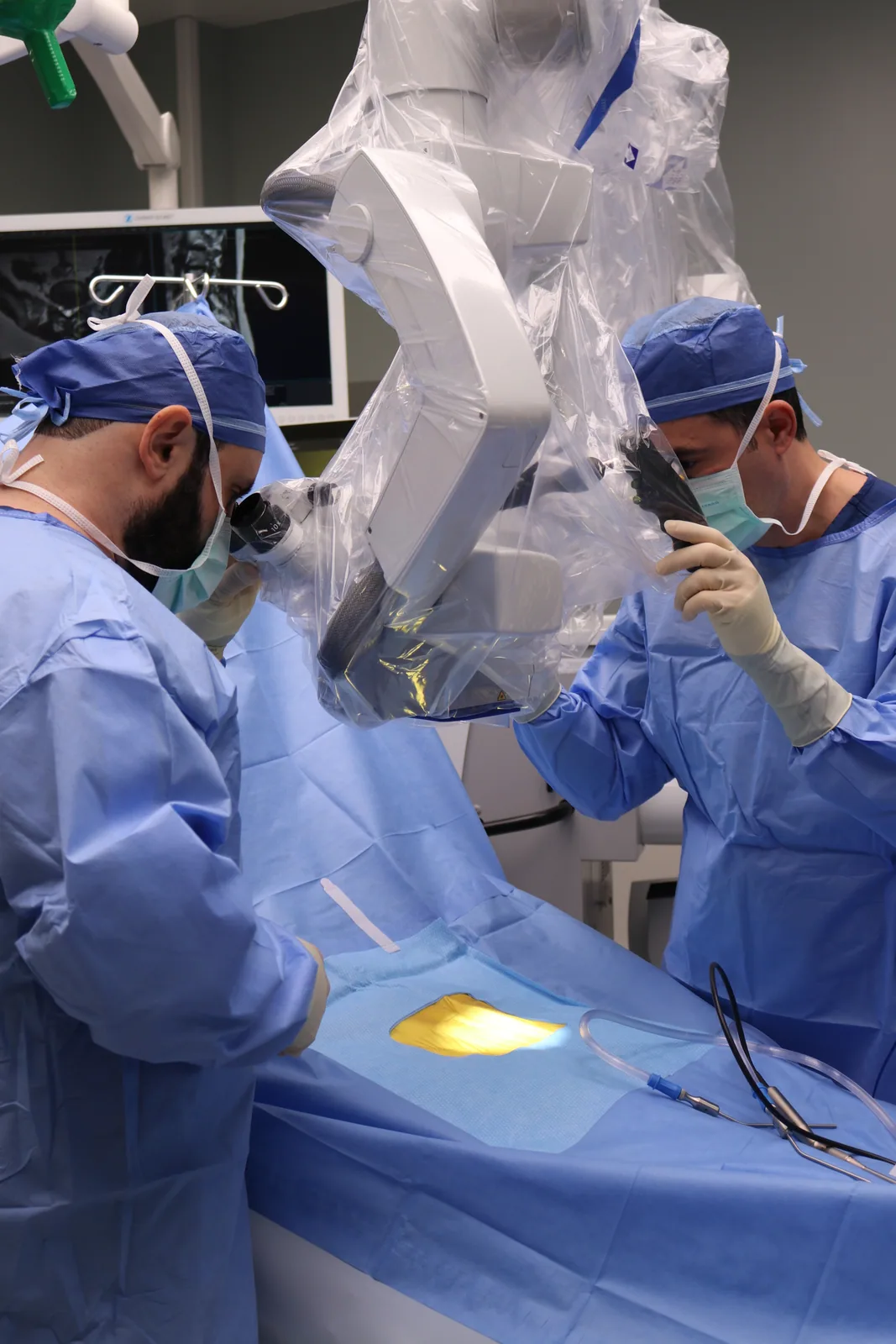
- What it is: Robotic spine surgery uses advanced robotic technology to assist with precise planning and execution of spine procedures. Robotic guidance improves screw placement accuracy, reduces radiation exposure, and supports complex deformity correction.
- Key benefits: Sub-millimeter accuracy for implant placement; Reduced radiation exposure for patient and team; Improved outcomes for complex deformity surgery.
- Typical candidates: Patients undergoing instrumented spine surgery; Complex anatomy or revision cases.
- Recovery: Recovery depends on the underlying procedure. The robotic component itself does not change recovery time — it improves precision and supports minimally invasive techniques that often shorten recovery.
Benefits of robotic spine surgery
- Sub-millimeter accuracy for implant placement
- Reduced radiation exposure for patient and team
- Improved outcomes for complex deformity surgery
- Enables more minimally invasive approaches
- Pre-operative planning with patient-specific imaging
Typical candidates
Dr. Yasmeh considers robotic spine surgery for patients with:
- Patients undergoing instrumented spine surgery
- Complex anatomy or revision cases
- Deformity correction (scoliosis, kyphosis)
- Cases where minimally invasive access is preferred
Every surgical decision starts with imaging review, a careful physical exam, and a candid conversation about goals — surgical and non-surgical options are always discussed together.
What recovery looks like
Recovery depends on the underlying procedure. The robotic component itself does not change recovery time — it improves precision and supports minimally invasive techniques that often shorten recovery.
About robotic spine surgery.
- Candidacy depends on your specific diagnosis, imaging, prior treatments, overall health, and goals. Dr. Yasmeh evaluates each patient individually and only recommends a procedure when it's a clear fit.
- Recovery depends on the underlying procedure. The robotic component itself does not change recovery time — it improves precision and supports minimally invasive techniques that often shorten recovery. Dr. Yasmeh and his team coordinate your post-operative therapy, follow-up imaging, and return-to-activity plan.
- Dr. Yasmeh consults at all four offices (East LA, Glendale, Santa Fe Springs, Tarzana) and performs surgery at affiliated hospitals and surgery centers. The surgical location is chosen based on procedure, your insurance, and convenience.
- Absolutely. Dr. Yasmeh welcomes second opinions and routinely reviews outside imaging and records before any surgical decision.
When Dr. Yasmeh recommends this procedure
Scoliosis Spinal Deformity
Read about this condition and when this procedure is the right answer.
Lumbar Stenosis
Read about this condition and when this procedure is the right answer.
Spinal Trauma
Read about this condition and when this procedure is the right answer.
Failed Back Surgery Syndrome
Read about this condition and when this procedure is the right answer.
Find out if robotic spine surgery is right for you.
Same-week consultations. Four Greater LA offices. Most insurance accepted.