
Scoliosis
& Spinal .

Scoliosis and spinal deformity refer to abnormal curvature or alignment of the spine. These conditions can affect posture and balance and may lead to chronic back pain, nerve compression, reduced mobility, weakness, and loss of function over time.
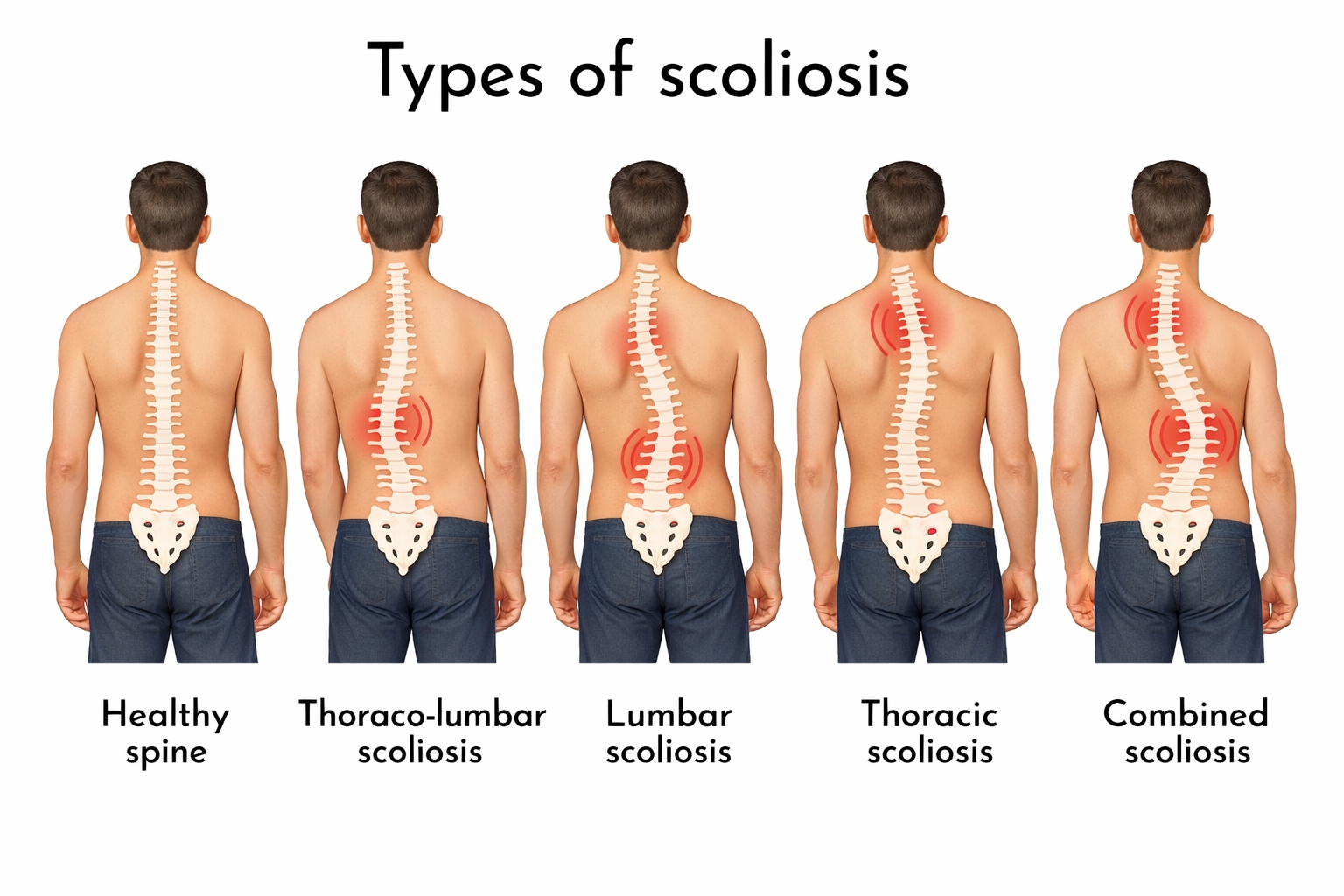
Scoliosis & Spinal Deformity
Now Accepting · New Patients

Diagnosis first. Treatment second.

Whole-spine alignment spine condition treated with conservative options first and motion-preserving surgery when needed.

4
LA offices
Region
Whole-spine alignment
★★★★★
Welcomed
Scoliosis & Spinal Deformity at a glance
  • What it is: Scoliosis and spinal deformity refer to abnormal curvature or alignment of the spine. These conditions can affect posture and balance and may lead to chronic back pain, nerve compression, reduced mobility, weakness, and loss of function over time.
  • Common symptoms: Visible curvature or uneven shoulders/hips; Chronic back pain; Trouble standing upright or walking distances.
  • First-line treatment: Observation and monitoring — Mild curves may need only periodic imaging and exam.
  • When surgery is considered: progressive symptoms, neurological changes, or pain unresponsive to conservative care.
Symptoms & causes

Understanding scoliosis & spinal deformity

Symptoms

Common symptoms

  • Visible curvature or uneven shoulders/hips
  • Chronic back pain
  • Trouble standing upright or walking distances
  • Numbness, tingling, or leg pain
  • Breathing or balance changes in severe cases
Causes

Common causes

  • Idiopathic (no known cause; most common in adolescents)
  • Degenerative changes (adult scoliosis)
  • Congenital vertebral abnormalities
  • Neuromuscular conditions
  • Prior trauma or surgery
How Dr. Yasmeh treats it

Treatment options

Dr. Yasmeh starts with the least-invasive option that fits your case and only escalates when clearly needed.

Conservative care
Step 1

Conservative care first

Most patients improve without surgery. Dr. Yasmeh sequences therapy, medication, and targeted injections before considering operative options.

  • Observation and monitoring — Mild curves may need only periodic imaging and exam.
  • Physical therapy & bracing — For appropriate curve magnitudes and skeletally immature patients.
  • Pain-focused care — Injections, medication, and PT for adult scoliosis with predominant pain.
Surgical care
When needed

When surgery is the right answer

When non-operative care has not worked or symptoms are progressive, Dr. Yasmeh offers motion-preserving techniques whenever clinically appropriate.

  • Reconstructive spine surgery — When curvature, pain, or neurological symptoms warrant it, Dr. Yasmeh discusses surgical correction options.
Common questions

About scoliosis & spinal deformity.

  • Most patients improve with conservative care — physical therapy, medication, and targeted injections. Dr. Yasmeh only recommends surgery when symptoms are progressive, when there is neurological compromise, or when conservative care has not resolved the problem.
  • Diagnosis combines a careful history, physical exam, and imaging (typically MRI). Dr. Yasmeh reviews your imaging with you in plain language so you understand what's happening.
  • Yes — Dr. Yasmeh offers second opinions, especially for patients told they need fusion. He evaluates motion-preserving alternatives like laminoplasty or artificial disc replacement when clinically appropriate.
  • Dr. Yasmeh sees patients at four offices across Greater Los Angeles: East LA (1700 E Cesar Chavez Ave), Glendale (1505 Wilson Terrace), Santa Fe Springs (12215 Telegraph Rd), and Tarzana (18840 Ventura Blvd).
Ready when you are

Get clarity on your scoliosis & spinal deformity today.

Same-week appointments. Four Greater LA offices. Most insurance accepted.

Call usBook online